
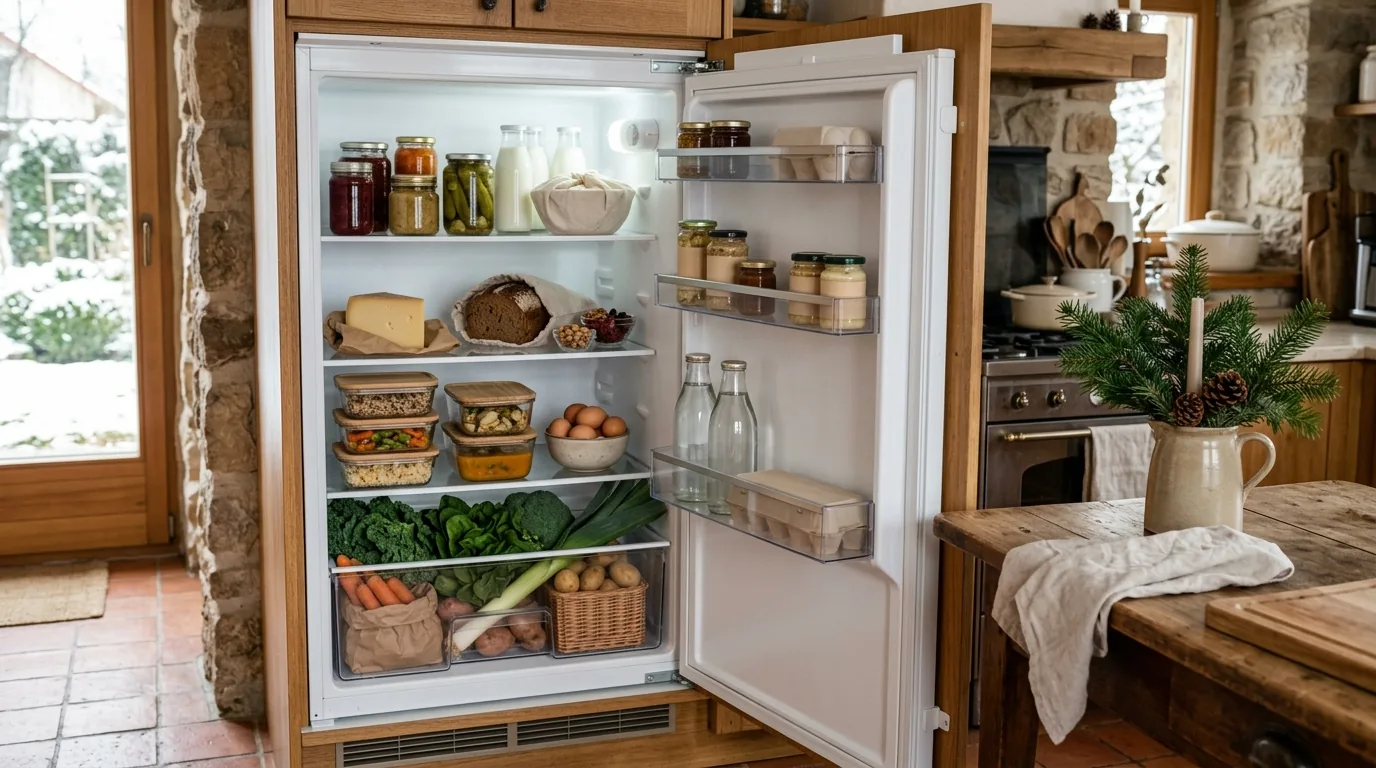
In the run-up to the holidays the fridge fills up fast: the roast, trays of sides, cheeses, desserts and everything that was already in there. If you are wondering how to make room in the fridge for Christmas, the trick is not to leave it until Christmas Eve. Here is a simple plan that frees up space for the festive food without throwing away anything that could still be eaten.
When to start: 2 to 3 weeks before
Early December is ideal. It leaves enough time to eat through what you have rather than binning it. About two weeks before Christmas, stop buying extra "just in case" and cook from what is already at home.
- Early December: take stock and plan a "leftovers week".
- The week before Christmas: clean the fridge and freezer.
- The day before the big shop: a final check and clear the shelves.
Step 1: Take everything out and sort it
Empty the fridge shelf by shelf and sort the food into three piles:
- Eat soon – opened cheese, yoghurts, vegetables, leftovers.
- Keep – butter, eggs, mustard and anything you will use over the holidays.
- Throw out – anything spoiled, mouldy or past its use-by date.
Know the difference between dates: food past its "best before" date is often still fine if it looks and smells right and has been stored properly. With meat, fish and dairy past the "use by" date, do not take the risk.
Step 2: Clean the shelves and check the temperature
Switch the empty fridge off, wash the shelves and drawers in warm soapy water and dry them well. A small bowl of bicarbonate of soda helps with smells. UK food safety guidance says your fridge should be 5°C or below, and a cheap fridge thermometer is the easiest way to check, because the dial does not always show the real temperature.
Step 3: Free up space for the festive food
A lot of space goes on things that do not need to be in the fridge:
- Drinks – move wine, soft drinks and water to a pantry, garage or a cool box.
- Fruit and veg – apples, citrus, onions, potatoes and tomatoes do not need the fridge.
- Unopened jars and sauces – until they are opened, the cupboard is fine.
- The freezer – freeze bread, stock or meat for New Year. For more on freezing, see How to store Christmas cookies.
Step 4: Pack the fridge with a plan
As the fridge fills up, keep these rules in mind:
- Put raw meat and fish on the bottom shelf so nothing drips onto ready-to-eat food.
- Let hot food cool before it goes in, so it does not warm up everything around it.
- Leave a little space between items so cold air can circulate.
- Square containers stack better than round bowls.
- Keep leftovers at the front so you do not forget them.
Step 5: Buy only what is missing
After the clear-out you know exactly what you have. Write the missing items on your Christmas food shopping list and skip anything already in the cupboard. You save money as well as space.
How Shoppie can help
Shoppie can help you keep track of what is in the fridge. Food you buy appears on its own in the Pantry tab with an estimated date you can adjust, and each morning the app reminds you what needs eating, so the forgotten yoghurt gets eaten before it goes off. See the guide Track food best-before dates. For the holidays you can keep a separate "Christmas" list and scan your receipt after shopping – products are recognised right on your iPhone. Shoppie is free, with no ads and no sign-up.